


Industry News
Cold Core Technology achieves successful mass production of non-airtight Micro-TEC
Views : 956
Update time : 2022-07-15 13:41:20
News Introduction: Cold Core Technology has successfully developed high-performance anti-dew point corrosion-resistant protective materials, effectively solving the technical problem that TEC devices cannot meet the requirements of non-airtight use environments.
In the field of optical communication, the thermoelectric cooling chip Micro-TEC is generally packaged with the optical chip and used in an inert gas environment. However, in recent years, the demand for Micro-TECs that can be used in non-airtight environments has increased significantly due to the need to control costs and special operating conditions. Traditional bulk large-size TECs mostly use silica gel/epoxy resin as sealing materials. However, due to the large difference in elastic modulus between the packaging material and the substrate, the heterogeneous interface is easily affected by thermal shock and cracks during use, resulting in TEC devices. Unable to meet the requirements of non-airtight use environment. Recently, Cold Core Semiconductor Technology Co., Ltd. has successfully developed a high-performance anti-dew point corrosion-resistant protective material, which effectively solves the above-mentioned sealing technical problems.
When sealing a TEC device with silicone/epoxy, generally only the surrounding edges of the device are sealed, and there is a certain risk in terms of sealing reliability. Once a gap or aging occurs at any edge seal, the sealing effect will be significantly deteriorated, and water vapor can enter the interior of the TEC device through the gap or aging wound, which will cause corrosion failure of the device.
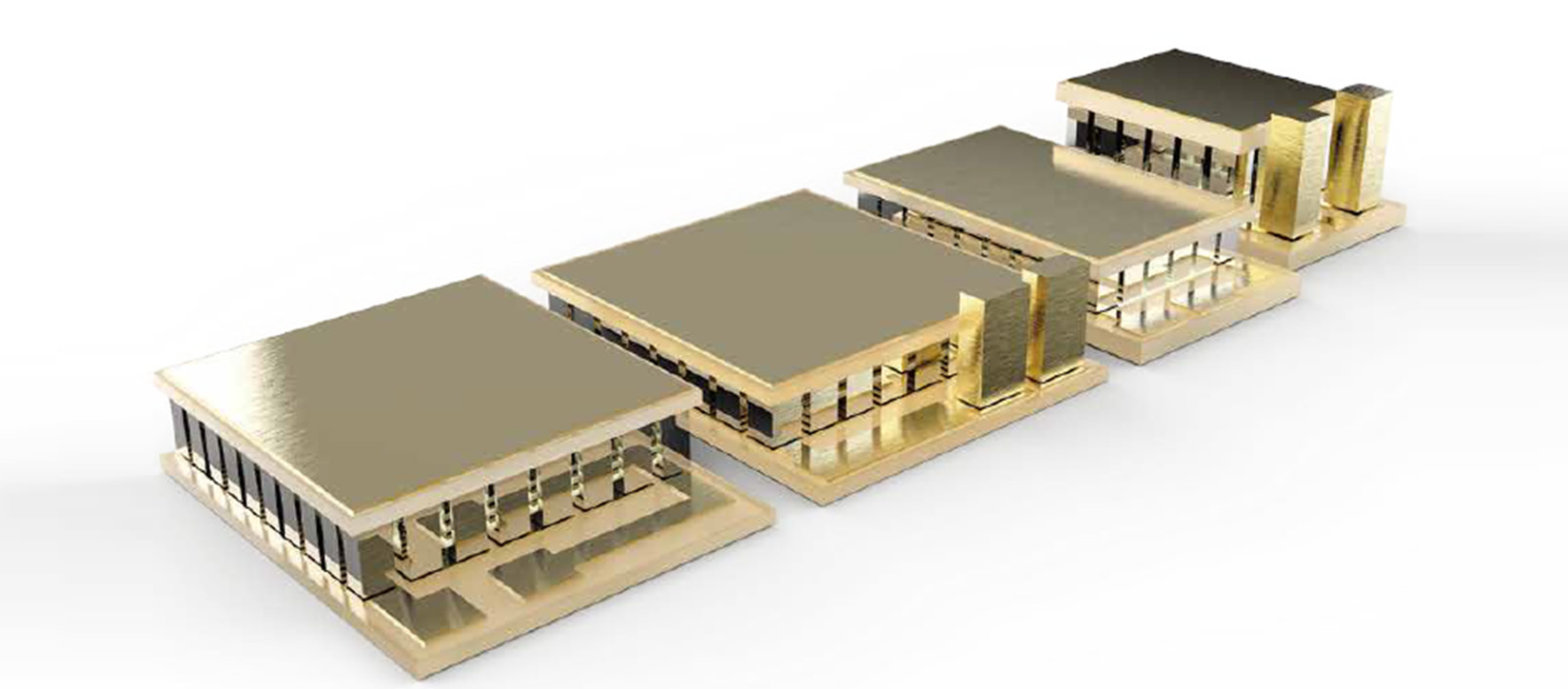
Compared with silica gel/epoxy resin, the protective material developed by our company can penetrate into the tiny space inside the Micro-TEC device to form a uniform, conformal, continuous, dense and low elastic modulus protective layer, which effectively prevents water vapor from affecting thermoelectricity. It has excellent electrical insulation, acid and alkali corrosion resistance, cold and thermal shock resistance, low thermal conductivity, and can be used for a long time under harsh working conditions.
Cold Core Semiconductor Technology Co., Ltd. mainly develops, produces and sells high-end Micro-TEC products, including aerospace-grade, JG-grade, industrial-grade, and commercial-grade Micro-TEC and corresponding high-performance thermoelectric raw materials. Since its establishment, the cold core company has always adhered to independent innovation and overcame difficulties, committed to improving the comprehensive performance of Micro-TEC devices, building an internationally advanced Micro-TEC industry chain, and serving the country with innovation and industry!
In the field of optical communication, the thermoelectric cooling chip Micro-TEC is generally packaged with the optical chip and used in an inert gas environment. However, in recent years, the demand for Micro-TECs that can be used in non-airtight environments has increased significantly due to the need to control costs and special operating conditions. Traditional bulk large-size TECs mostly use silica gel/epoxy resin as sealing materials. However, due to the large difference in elastic modulus between the packaging material and the substrate, the heterogeneous interface is easily affected by thermal shock and cracks during use, resulting in TEC devices. Unable to meet the requirements of non-airtight use environment. Recently, Cold Core Semiconductor Technology Co., Ltd. has successfully developed a high-performance anti-dew point corrosion-resistant protective material, which effectively solves the above-mentioned sealing technical problems.
When sealing a TEC device with silicone/epoxy, generally only the surrounding edges of the device are sealed, and there is a certain risk in terms of sealing reliability. Once a gap or aging occurs at any edge seal, the sealing effect will be significantly deteriorated, and water vapor can enter the interior of the TEC device through the gap or aging wound, which will cause corrosion failure of the device.
Compared with silica gel/epoxy resin, the protective material developed by our company can penetrate into the tiny space inside the Micro-TEC device to form a uniform, conformal, continuous, dense and low elastic modulus protective layer, which effectively prevents water vapor from affecting thermoelectricity. It has excellent electrical insulation, acid and alkali corrosion resistance, cold and thermal shock resistance, low thermal conductivity, and can be used for a long time under harsh working conditions.
Cold Core Semiconductor Technology Co., Ltd. mainly develops, produces and sells high-end Micro-TEC products, including aerospace-grade, JG-grade, industrial-grade, and commercial-grade Micro-TEC and corresponding high-performance thermoelectric raw materials. Since its establishment, the cold core company has always adhered to independent innovation and overcame difficulties, committed to improving the comprehensive performance of Micro-TEC devices, building an internationally advanced Micro-TEC industry chain, and serving the country with innovation and industry!
Related News
Read More >>
 AI Data Center Optical Evolution: Trends & Market
Sep .20.2026
With the rapid growth of artificial intelligence computing, data centers now need much more bandwidth. The physical limitations of traditional copper cable connections are becoming increasingly apparent as transmission speeds rise.
 The Global OCS Market Will Exceed $8 Billion by 2030
Sep .09.2026
The latest industry forecasts indicate that by 2030, the total size of the global optical path switch market is expected to exceed $8 billion, with a compound annual growth rate (CAGR) of over 30% between 2026 and 2030.
 400G Single-Lane: Next Inflection for AI Datacenters
Aug .27.2026
400G per lane is the next inflection for AI data centers, boosting bandwidth and scaling, but requires advances in materials, packaging, and cooling.
 AI-driven 800G Ramp-up Amplifies Quality Risks
Aug .14.2026
Faced with a surge in orders, leading global manufacturers are increasing production line speeds and shortening delivery cycles. However, the real challenge of this growth goes beyond “can we deliver orders on time?”