


Industry News
Will China's semiconductor strategy succeed? If so, when?
Views : 844
Author : JIUZHOU
Update time : 2022-12-02 10:59:07
For more than 15 years, China has invested heavily in semiconductor R&D and production. Some companies have achieved great success and started to become very important. Success in manufacturing has been relatively limited.
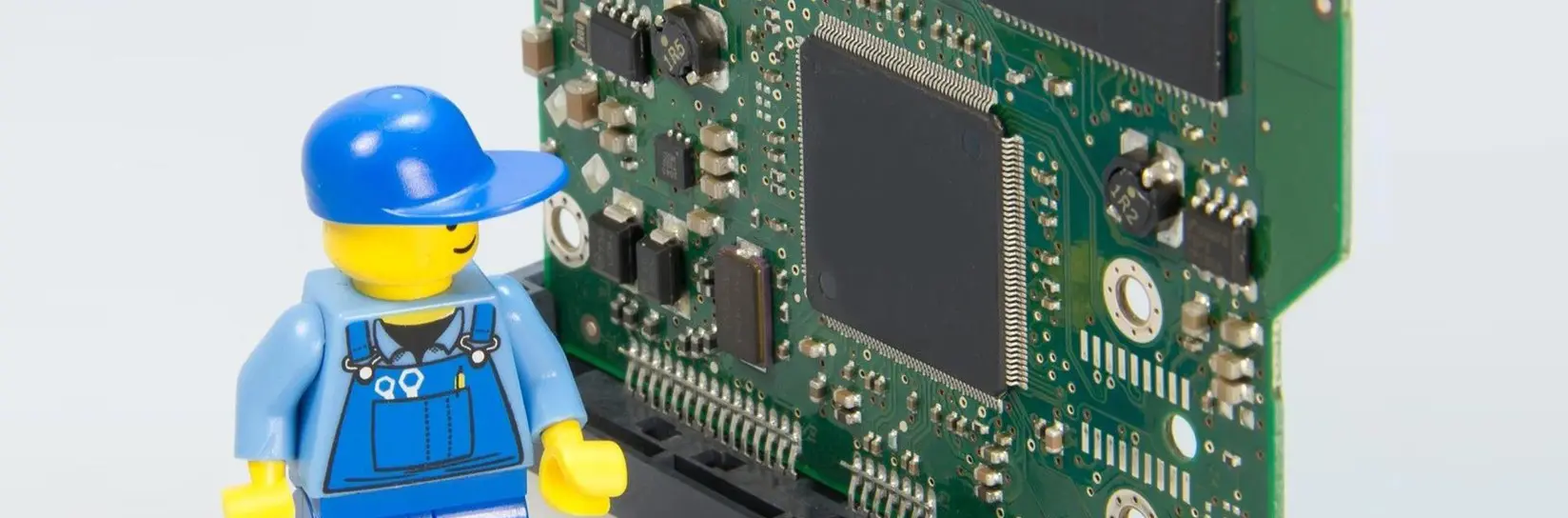
For more than 15 years, China has invested heavily in semiconductor R&D and production. Some companies have achieved great success and started to become very important. Manufacturing has had relatively limited success, even before the U.S.-China trade war and U.S. government restrictions on selling technology and products to Chinese customers.
If you look at the mainstream semiconductor industry that produces processors and memory, China is clearly behind. It does not have access to leading manufacturing technologies. In China, lithography nodes of 12nm and below cannot be mass-produced. The expansion of China's two largest storage equipment makers has been hampered by the inability to obtain the equipment needed to expand. Likewise, logic manufacturing is unlikely in the short term. Without access to major non-Chinese equipment makers, China will take years to develop its own equipment and supply chain to manufacture products at sub-14nm lithography nodes. Several Chinese companies are working in this area, developing lithography, etching and deposition equipment, but it will take years to reach the level of technology required for the most advanced nodes.
For other types of equipment, Chinese companies are making a big push to overcome their main challenges:
- Power equipment and module manufacturers are increasing sales and production capacity at a very high rate to meet the huge demand for vehicle electrification and wider industry electrification.
- Compound semiconductors are also a major investment area for power devices, RF modules and photonics. In all these fields, Chinese companies have entered the top 15 in the world.
- Image sensors and advanced packaging are also strong points of Chinese companies.
- In some areas, such as advanced substrates and electronic design automation, there are few Chinese companies of any size. This could be a major issue for the future development of Chinese industry.
Two key questions are: Will China's semiconductor industry decouple from the West's? When will it happen? The answer is complex. One thing to keep in mind is that Chinese companies do not have quarterly targets, while US companies do. China has a lot of time, money, and millions of skilled workers, and it really matters.
For more than 15 years, China has invested heavily in semiconductor R&D and production. Some companies have achieved great success and started to become very important. Manufacturing has had relatively limited success, even before the U.S.-China trade war and U.S. government restrictions on selling technology and products to Chinese customers.
If you look at the mainstream semiconductor industry that produces processors and memory, China is clearly behind. It does not have access to leading manufacturing technologies. In China, lithography nodes of 12nm and below cannot be mass-produced. The expansion of China's two largest storage equipment makers has been hampered by the inability to obtain the equipment needed to expand. Likewise, logic manufacturing is unlikely in the short term. Without access to major non-Chinese equipment makers, China will take years to develop its own equipment and supply chain to manufacture products at sub-14nm lithography nodes. Several Chinese companies are working in this area, developing lithography, etching and deposition equipment, but it will take years to reach the level of technology required for the most advanced nodes.
For other types of equipment, Chinese companies are making a big push to overcome their main challenges:
- Power equipment and module manufacturers are increasing sales and production capacity at a very high rate to meet the huge demand for vehicle electrification and wider industry electrification.
- Compound semiconductors are also a major investment area for power devices, RF modules and photonics. In all these fields, Chinese companies have entered the top 15 in the world.
- Image sensors and advanced packaging are also strong points of Chinese companies.
- In some areas, such as advanced substrates and electronic design automation, there are few Chinese companies of any size. This could be a major issue for the future development of Chinese industry.
Two key questions are: Will China's semiconductor industry decouple from the West's? When will it happen? The answer is complex. One thing to keep in mind is that Chinese companies do not have quarterly targets, while US companies do. China has a lot of time, money, and millions of skilled workers, and it really matters.
Related News
Read More >>
 AI Data Center Optical Evolution: Trends & Market
Sep .20.2026
With the rapid growth of artificial intelligence computing, data centers now need much more bandwidth. The physical limitations of traditional copper cable connections are becoming increasingly apparent as transmission speeds rise.
 The Global OCS Market Will Exceed $8 Billion by 2030
Sep .09.2026
The latest industry forecasts indicate that by 2030, the total size of the global optical path switch market is expected to exceed $8 billion, with a compound annual growth rate (CAGR) of over 30% between 2026 and 2030.
 400G Single-Lane: Next Inflection for AI Datacenters
Aug .27.2026
400G per lane is the next inflection for AI data centers, boosting bandwidth and scaling, but requires advances in materials, packaging, and cooling.
 AI-driven 800G Ramp-up Amplifies Quality Risks
Aug .14.2026
Faced with a surge in orders, leading global manufacturers are increasing production line speeds and shortening delivery cycles. However, the real challenge of this growth goes beyond “can we deliver orders on time?”