


Industry News
New versions of low-power 200G QSFP56 and 400G QSFP-DD active optical cables for domestic enterprises are announced
Views : 823
Author : JIUZHOU
Update time : 2022-09-02 18:00:54
Domestic enterprises low-power 200G QSFP56 and 400G QSFP-DD active optical cable new version announced
Domestic enterprises recently announced the completion of the low-power design upgrade of 200G QSFP56 and 400G QSFP-DD multimode optical modules and active optical cables, and the new version will be released for sale today.
Yi Feiyang, who has extensive experience in the global active optical cable field, recently announced the completion of the low-power design upgrade of 200G QSFP56 and 400G QSFP-DD multimode optical modules and active optical cables, and the new version will be released for sale today.
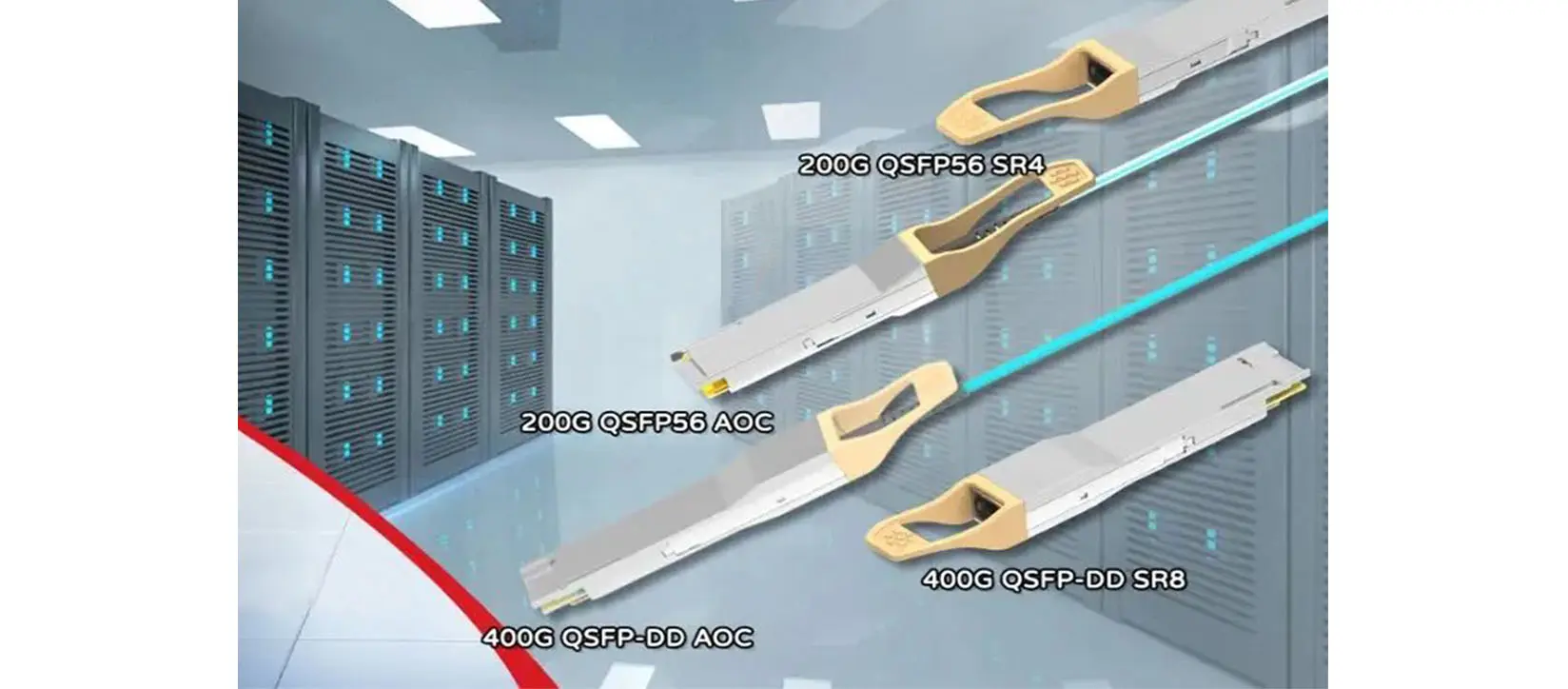
The newly launched 200G QSFP56 SR4/AOC is based on Broadcom's 4X50G PAM4 7nm DSP. The optical port type is MPO12 (APC), the TDECQ of the test eye diagram at room temperature and high temperature is about 1db, the maximum power consumption at three temperatures is 4.65W, and the OMA sensitivity is about -8dbm.
The newly launched 400G QSFP-DD SR8/AOC is based on Broadcom's 8X50G PAM4 7nm DSP. The optical port type is MPO16 (APC), the test eye diagram TDECQ<2.0db at room temperature and high temperature, the maximum power consumption at three temperatures is 8.3W, and the OMA sensitivity is around -8dbm.
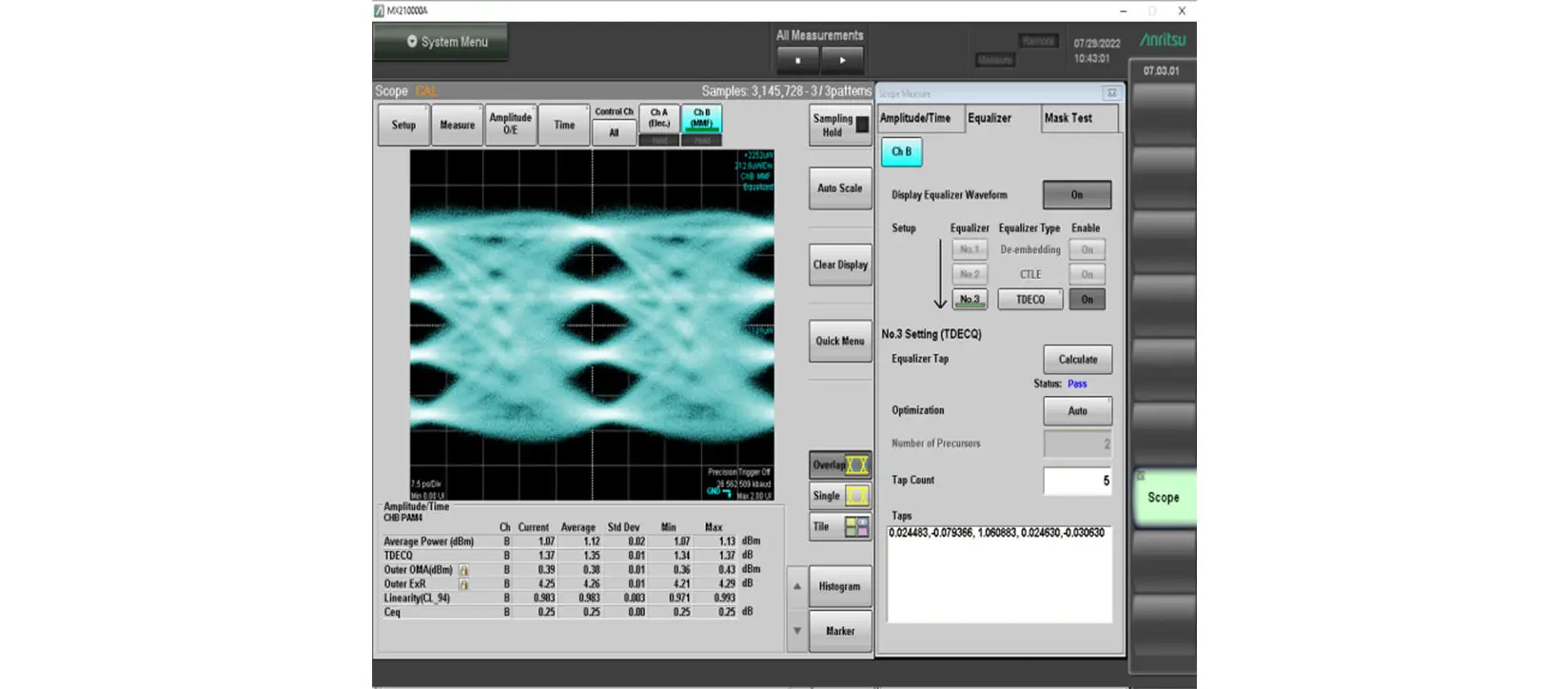
The typical eye diagrams of the four products are as follows:
Domestic enterprises's multi-mode optical modules and active optical cable products based on 7nm DSP are as follows:
200G QSFP56 AOC
200G QSFP56 SR4
200G QSFP56 to 2X100G QSFP56 AOC
400G QSFP-DD AOC
400G QSFP-DD SR8
400G QSFP-DD to 2X200G QSFP56 AOC
400G QSFP-DD to 4X100G QSFP56 AOC
Domestic enterprises has entered the field of multimode VCSEL active optical cables since 2011, and has so far delivered more than 3.5 million active optical cable products with various speed combinations to global data centers. The product has various features such as diversified design, high cost performance, and remote maintenance and upgrade by using cloud programmer. In addition, Domestic enterprises can also provide customized services according to the customer's demand scenarios and product working environment.
About GIGALIGHT As a guide for open optical network devices, GIGALIGHT integrates the design, manufacture and sales of active and passive optical devices and subsystems. The products are mainly optical modules, optical passive devices, coherent optical communication Modules and Subsystems. Domestic enterprises focuses on application fields such as data centers, 5G bearer networks, metro WDM transmission, and ultra-high-definition broadcast and video. It is an innovatively designed high-speed optical interconnect hardware solution provider.
Domestic enterprises recently announced the completion of the low-power design upgrade of 200G QSFP56 and 400G QSFP-DD multimode optical modules and active optical cables, and the new version will be released for sale today.
Yi Feiyang, who has extensive experience in the global active optical cable field, recently announced the completion of the low-power design upgrade of 200G QSFP56 and 400G QSFP-DD multimode optical modules and active optical cables, and the new version will be released for sale today.
The newly launched 200G QSFP56 SR4/AOC is based on Broadcom's 4X50G PAM4 7nm DSP. The optical port type is MPO12 (APC), the TDECQ of the test eye diagram at room temperature and high temperature is about 1db, the maximum power consumption at three temperatures is 4.65W, and the OMA sensitivity is about -8dbm.
The newly launched 400G QSFP-DD SR8/AOC is based on Broadcom's 8X50G PAM4 7nm DSP. The optical port type is MPO16 (APC), the test eye diagram TDECQ<2.0db at room temperature and high temperature, the maximum power consumption at three temperatures is 8.3W, and the OMA sensitivity is around -8dbm.
The typical eye diagrams of the four products are as follows:
Domestic enterprises's multi-mode optical modules and active optical cable products based on 7nm DSP are as follows:
200G QSFP56 AOC
200G QSFP56 SR4
200G QSFP56 to 2X100G QSFP56 AOC
400G QSFP-DD AOC
400G QSFP-DD SR8
400G QSFP-DD to 2X200G QSFP56 AOC
400G QSFP-DD to 4X100G QSFP56 AOC
Domestic enterprises has entered the field of multimode VCSEL active optical cables since 2011, and has so far delivered more than 3.5 million active optical cable products with various speed combinations to global data centers. The product has various features such as diversified design, high cost performance, and remote maintenance and upgrade by using cloud programmer. In addition, Domestic enterprises can also provide customized services according to the customer's demand scenarios and product working environment.
About GIGALIGHT As a guide for open optical network devices, GIGALIGHT integrates the design, manufacture and sales of active and passive optical devices and subsystems. The products are mainly optical modules, optical passive devices, coherent optical communication Modules and Subsystems. Domestic enterprises focuses on application fields such as data centers, 5G bearer networks, metro WDM transmission, and ultra-high-definition broadcast and video. It is an innovatively designed high-speed optical interconnect hardware solution provider.
Related News
Read More >>
 AI Data Center Optical Evolution: Trends & Market
Sep .20.2026
With the rapid growth of artificial intelligence computing, data centers now need much more bandwidth. The physical limitations of traditional copper cable connections are becoming increasingly apparent as transmission speeds rise.
 The Global OCS Market Will Exceed $8 Billion by 2030
Sep .09.2026
The latest industry forecasts indicate that by 2030, the total size of the global optical path switch market is expected to exceed $8 billion, with a compound annual growth rate (CAGR) of over 30% between 2026 and 2030.
 400G Single-Lane: Next Inflection for AI Datacenters
Aug .27.2026
400G per lane is the next inflection for AI data centers, boosting bandwidth and scaling, but requires advances in materials, packaging, and cooling.
 AI-driven 800G Ramp-up Amplifies Quality Risks
Aug .14.2026
Faced with a surge in orders, leading global manufacturers are increasing production line speeds and shortening delivery cycles. However, the real challenge of this growth goes beyond “can we deliver orders on time?”